A movie night is the easiest gathering to host and the easiest to host badly: friends arrive, twenty minutes vanish into scrolling menus while the pizza cools, someone talks through the quiet scenes, and the evening dissolves into phones. The difference between that and a movie night people ask you to repeat is almost entirely preparation — choices made before the doorbell rings. This guide explains how to host a movie night properly: settling the film question before guests arrive, the screen, sound and seating setup that makes a living room feel like a cinema, a snack strategy that does not pause the film, and the small hosting touches that turn watching a movie into an occasion.
Choose the Film Before Anyone Arrives
The scroll of doom — six people browsing a streaming catalogue while enthusiasm evaporates — is the host’s one unforgivable failure, so decide the film in advance. The reliable method: the host shortlists two or three films in advance (announced in the invitation, so anticipation builds and objections surface early), and the group picks between them on the night in thirty seconds. Choose for the audience you have, not the audience you wish for: match the film’s length to the evening (a three-hour epic on a work night is a hostage situation), its intensity to the group’s mood, and its familiarity to the occasion — a beloved rewatch unites a mixed group better than an arthouse gamble, while a film-club crowd may want the opposite. The strongest default for mixed groups is the crowd-pleasing classic nobody has seen in years: nostalgia supplies the warmth, quality supplies the substance. Our guide to understanding movie genres helps match the pick to the mood you are hosting for. Have the film ready to play — rented, downloaded or queued, subtitles decided (on, for dialogue-heavy films in chatty rooms), and the remote charged. Pressing play within minutes of everyone sitting down is the single gesture that announces this evening has a host.
Screen, Sound and Seating: the Living-Room Cinema
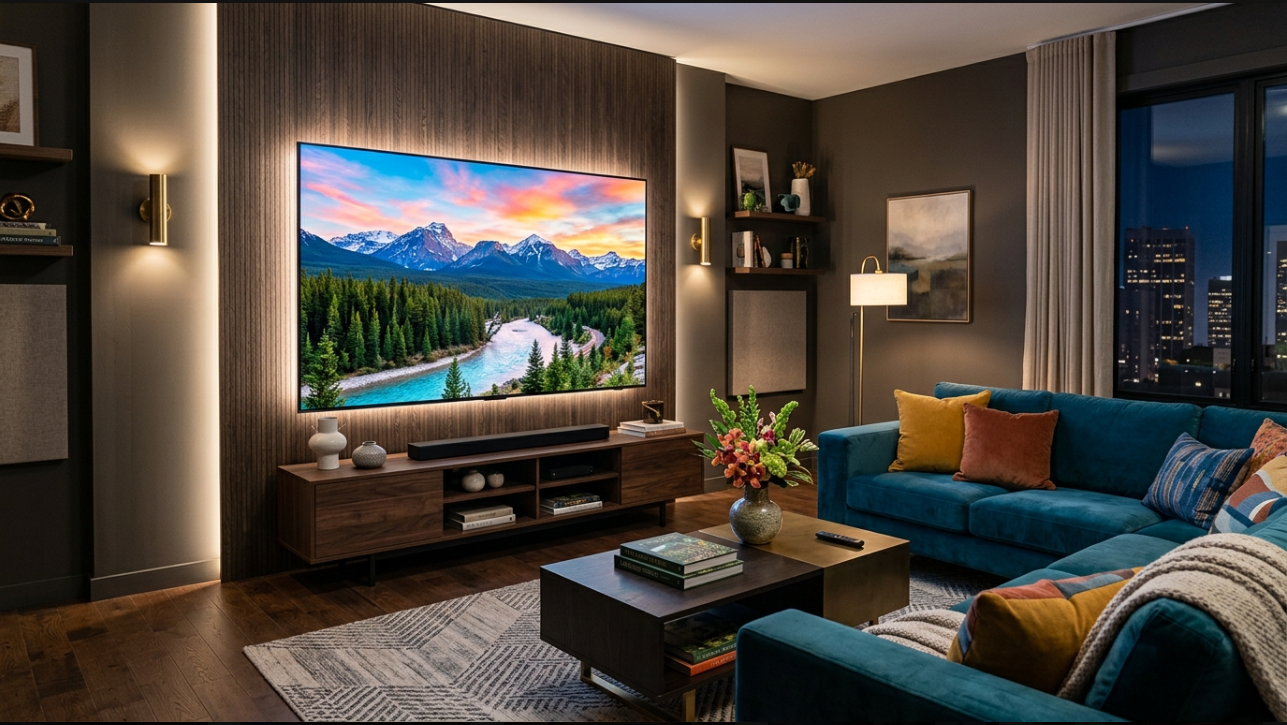
You do not need new equipment; you need the equipment you have arranged deliberately. Screen first: darken the room as much as you can — blackout curtains or a blanket over the window behind the TV transforms picture quality more than any settings menu, because contrast is what eyes actually read as quality. Set the picture mode to its film/cinema preset and disable motion smoothing (the “soap opera effect” that makes cinema look like a daytime serial) — five minutes in a menu, a permanent upgrade. Sound is the secret half of cinema: the TV’s built-in speakers are the weakest link in most rooms, so any step up — a soundbar, a Bluetooth speaker placed under the screen, even good headphones splitters for two — pays off disproportionately, and dialogue clarity matters more than bass. Seating should be arranged for the screen, not for conversation: pull the sofa square, add floor cushions and a beanbag for overflow, give everyone a sightline that does not involve a neck angle, and put drinks within reach on side surfaces so nobody crosses the screen mid-scene. Test the whole setup with the actual film’s first scene before guests arrive — volume levels, subtitle size, the pause button’s location in the dark. A cinema is just a room where nothing technical interrupts the story; your job is to remove the interruptions in advance.
Snacks and Drinks: Fuel Without Interruptions
Movie food obeys one law: it must be eatable in the dark, in silence, without looking down or pausing anything. Popcorn remains champion for a reason — but upgrade it from the bag: warm it, butter and salt it properly, and offer one seasoning shaker (smoked paprika, parmesan, or a sweet cinnamon mix) that makes it feel like a house special. Build the rest of the table around hand food and no cutlery: sliders or loaded nachos served before the film or at a planned intermission, not during; sweets in small bowls rather than rustling packets (decant everything — wrapper noise is the soundtrack nobody chose); and drinks in cups with lids or bottles, because the one spilled drink in the dark costs ten minutes and a cushion. Timing is the host’s craft: serve the substantial food as people arrive and settle, start the film when plates are mostly done, and — for longer films — declare an intermission at the natural midpoint for refills and the bathroom, which protects the second half from staggered exits. Dietary needs get asked in the invitation, not discovered at the table. The test of the spread is simple: from the first scene to the credits, nobody needed anything that required lights, noise or leaving the story. Feed people like the film matters, and it starts to.
The Hosting Touches That Make It an Event
What separates a movie night from merely watching a movie at someone’s house is framing — the small signals that this was arranged. A theme costs little and multiplies fun: the film’s cuisine for dinner, a dress suggestion, a one-question quiz or prediction card before the film (“who survives? who cries first?”) that gives the credits conversation a running start. Manage the talk question kindly and early: agree the house style in the invitation — some groups treasure commentary, others want cinema silence — and seat the chatter-prone beside the tolerant. Phones follow the same negotiated rule; a basket by the door, offered lightly, works better than glares. After the credits, give the evening its second act: ten minutes of actual discussion (best scene, the ending argument, the rating out of ten that someone will defend to the death) over a last drink or dessert — because the conversation after is where a shared film becomes a shared memory, and it is the part streaming alone at home can never supply. Hosting a movie night well is a small art with a large return: the same film, the same friends, and an evening that feels like an event instead of an accident. Choose early, set the room, feed quietly, frame it lightly — and press play.
The Bottom Line
How to host a movie night: shortlist the film before guests arrive, darken the room and fix the sound and seating, serve food that works in the dark with a planned intermission, and frame the evening with a theme and a post-film conversation. The movie is the easy part. The hosting is what they remember.
Leave a Reply